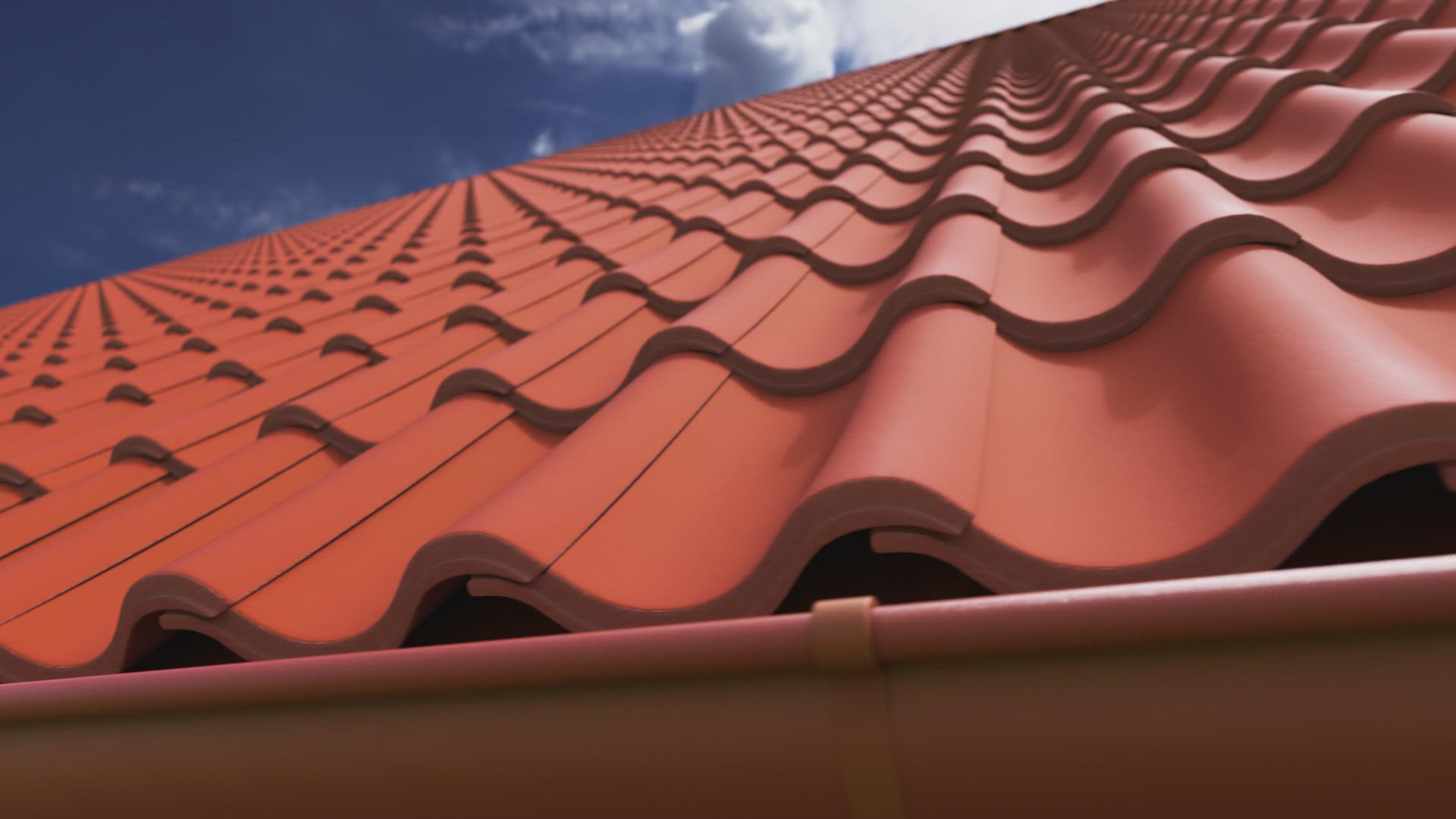
Cracked or Slipped Tiles
Heat, wind and foot traffic crack and shift tiles, opening gaps for water to reach the layer underneath.

Forecasters expect a very strong El Niño this winter, and that raises the odds of heavy rain in the desert. Here’s how to get your roof ready before the storms arrive.
Updated October 2026El Niño is a warming of the Pacific Ocean that shifts storm tracks across the country. In strong El Niño years, the Southwest has better-than-usual chances of a wet winter.
For Coachella Valley roofs, that’s a real test. After months of extreme heat and sun, tiles crack, sealants dry out and flashing loosens. Those problems stay hidden in dry weather. The first heavy rain finds every one of them, often all at once.
Wet winters don’t happen every El Niño year. But a roof inspection costs nothing, and fixing a cracked tile before the rain is far easier than repairing a water-stained ceiling after it.
These are the problems we find most often on Coachella Valley roofs. Most of them can’t be seen from the ground.
Heat, wind and foot traffic crack and shift tiles, opening gaps for water to reach the layer underneath.
On tile roofs, the underlayment beneath the tiles is what actually keeps water out. Years of desert heat wear it down.
Seals around vents, skylights, chimneys and walls crack in the sun and are among the first places to leak.
Sand, leaves and palm debris block gutters, drains and scuppers, so water backs up instead of draining away.
Low spots hold water, and cracked coatings or worn membranes let it seep through.
Damage from past windstorms or monsoons can go unnoticed for months until the next heavy rain.
Start with these simple checks you can do safely from the ground and inside your home.
Look for water stains, bubbling paint or damp insulation. They point to leaks that already exist.
Walk around the house and look for cracked, slipped or missing tiles and anything that looks out of place.
Make sure water has a clear path off the roof and away from your home’s foundation.
Branches scrape roofing in the wind and drop debris that clogs drains.
A roofer can check the underlayment, flashing and seals you can’t see from the ground, and fix problems while the weather is still dry.
Please stay off the roof. Tile roofs break easily underfoot, and any roof is dangerous to walk on, especially when it’s wet. Leave the up-close inspection to a licensed roofer.
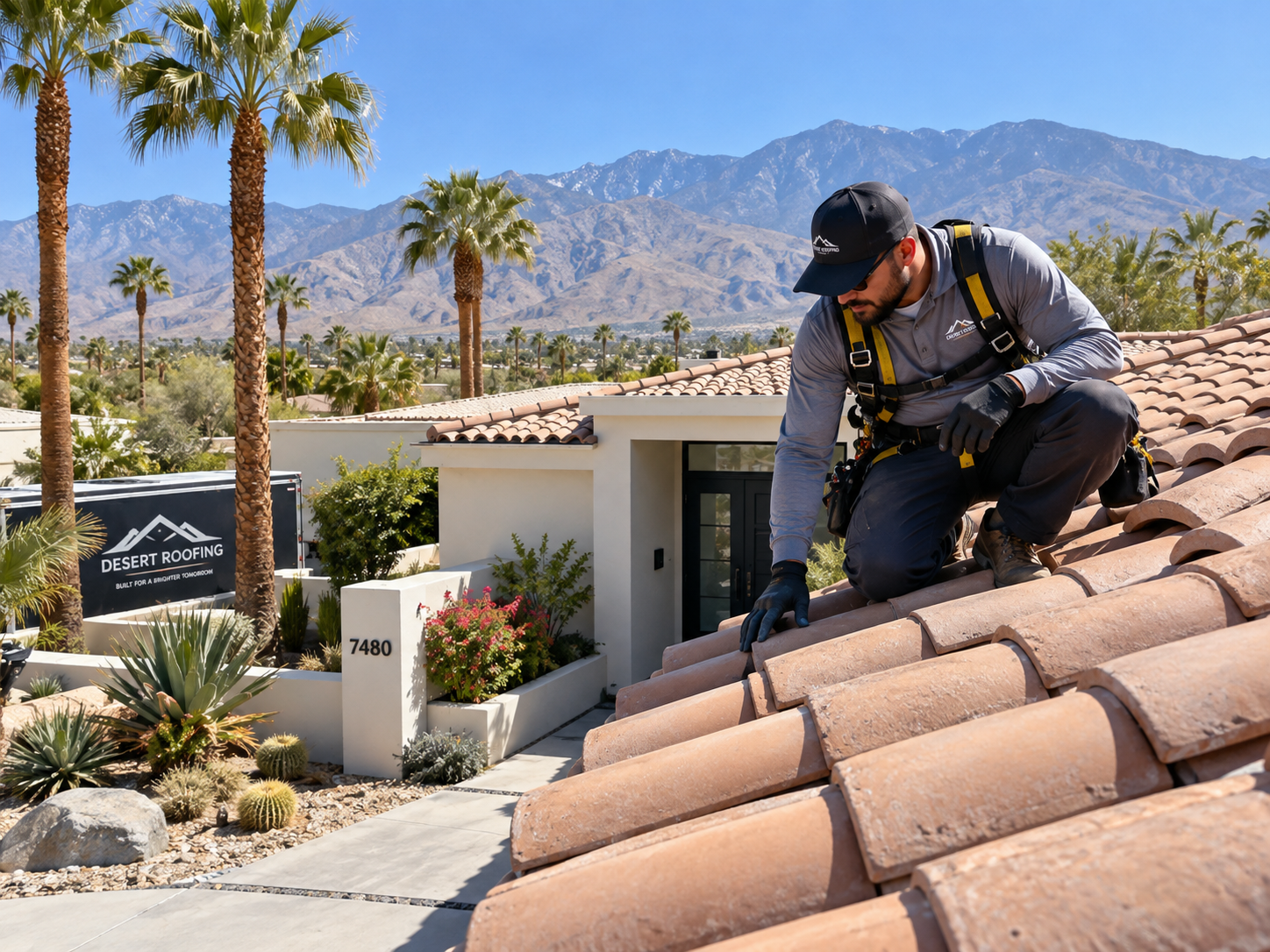
Cracked, slipped, missing or worn roofing materials, plus wear on flat roof coatings and membranes.
Seals around vents, skylights, chimneys, walls and valleys, where most roof leaks start.
Gutters, downspouts, roof drains and scuppers, and low spots where water can pond.
Water stains and damage that show where repairs are needed most.
After the inspection, we explain what we found and your options, from small repairs to roof repair or replacement. No pushy sales tactics.
Call us right away. While you wait, a few simple steps can limit the damage:
Not for certain. A strong El Niño raises the odds of a wetter-than-average winter in the Southwest, but every year is different. Because heavy desert storms can do a lot of damage in a short time, it’s worth having your roof checked before the season starts.
As soon as possible, before the winter storm season. Repairs are easiest in dry weather, and roofers get busy once the rain starts.
Yes. Desert Valley Construction & Roofing offers free roof inspections to find leaks, damaged materials and other roofing problems.
Call us as soon as a leak starts so we can tell you what can be done right away. Lasting roof repairs are done once the roof is dry, which is one more reason to fix problems before storm season.
Yes. We inspect and repair tile, shingle, flat and low-slope roofs, mobile and manufactured home roofs, and commercial roofs throughout the Coachella Valley.
Get a fast, free roof inspection from Coachella Valley’s most trusted team. Call us at 760-346-2799.